
Skip to content Skip to sidebar Skip to footer

A Journey Through Cancer: Diagnosis, Shock and The Will to Fight(Part I)


Collage of Kizito Namulanda in two poses against a blue backdrop.

Editor’s Introduction
Dear valued readers,

Life, like a winding river, rarely travels in a straight line. It twists, turns, and flows forward—even through challenges. When obstacles arise, we remember that life goes on, and we can choose to keep flowing, even when the current is strong. Challenges can slow us, ground us, or bury us, yet they can also make us stronger and more prepared for what lies ahead.

At Kollea Hub, we transform challenges into inspiration through powerful storytelling. We give people facing difficult situations a platform to share experiences that uplift others. Those who overcome life-threatening situations become our Life Champions.

Meet our first Life Champion: Duncan Kizito Namulanda.
Namulanda battled stage 3 laryngeal cancer with radiotherapy and chemotherapy; when it recurred a year later, he faced surgery—his throat literally cut open—leaving him with a permanent voice disability. While recuperating, his employer, Standard Group, delivered a blow: a termination email while he was in India for treatment. After nineteen years at KTN—Standard Group—his career ended in the harshest way. He faced a stark choice: weep over a lost job or fight for his life as cancer held him by the neck.

His resolve is truly remarkable. In a three-part series, Namulanda narrates his journey to inspire others.

This is his story—told to inspire.

Editor,
Kollea Hub

Editor’s Introduction – Part I: The Diagnosis and The Will to Fight

Life, like a winding river, rarely travels in a straight line. It twists, turns, and flows forward—even through challenges. When obstacles arise, we must remember that life goes on, and we can choose to keep flowing, even when the current is strong. Challenges can slow us, ground us, or bury us, yet they can also make us stronger and more prepared for what lies ahead.
A journey from challenge to inspiration

At Kollea Hub, we have embarked on a journey to transform challenges into inspiration through storytelling. Our aim is to give people facing difficult situations a platform to share their experiences in a way that uplifts others. When someone has overcome adversity, we will call them a Life Champion.

Meet our first Life Champion: Duncan Kizito Namulanda

Our inaugural Life Champion is Kizito Namulanda. After battling stage 3 laryngeal cancer at the start of 2022 and undergoing a combined radiation and chemotherapy treatment in India, the disease recurred a year later, prompting a surgery that literally cut his throat open. While he was still rebuilding, his employer—Standard Group—delivered an unexpected blow: a termination email while he was in India for treatment. His nineteen years of dedication at KTN—Standard Group—ended in the harshest way. Yet he remained focused. He faced a stark choice: weep over a lost job or fight for his life as cancer held him by the throat—literally.

This is his story—told to inspire.

Laryngectomy, the surgery to remove part or all of the voice box left Namulanda with a permanent voice disability, a new chapter he never imagined. But his resolve to keep going is truly remarkable. In touching way, Namulanda narrates his journey in a three-part series.
This first installment of our three-part series, When Problems Knock: A Journey Through Cancer, Courage, and Consequences, focuses on the introduction and diagnosis.

Consent and Collaboration
This narrative is published with Namulanda’s explicit, informed consent. He reviewed the material and approved its presentation in this series. We have respected his privacy by omitting or generalizing sensitive personal details beyond what he chose to share publicly. Namulanda remains an active collaborator in the series, with opportunities to review future publications and contribute updates or corrections as needed.
Part I: Diagnosis and The Will to Fight

By Kizito Namulanda

When I received the results of my biopsy in February 2022, I was devastated. The results came via email, and as soon as I read the diagnosis, I dropped what I was doing and drove straight home. Standing at the door of my house, I looked at my two-and-a-half-year-old son and thought, “He hasn’t even started school.” I climbed the stairs, locked the door, and began to cry. Tears rolled down my cheeks freely. It was heavy—so many things rushed through my mind. I felt death crawling toward me, and I felt helpless.

By Kizito Namulanda

It all began with a simple observation from Prof. Ruth Nduati in February 2022. I used to meet her, and her husband, Engineer Peter Nduati, on weekend morning walks in the neighborhood. I remember she asked me, “Kizito, what is happening to your voice? Have you had it checked out?” I hadn’t, assuming the hoarseness might be due to drinking too much dawa (ginger, lemon, and honey), or perhaps I had COVID-19 but managed to shrug it off. I had heard stories about hoarseness lasting a long time, but she insisted I needed to see an ENT specialist. She said my voice had been hoarse for some time and appeared to be progressing. She offered to ask a senior ENT doctor whom she knew to see me and arranged for an appointment with Prof. Macharia Munene at Nairobi ENT Clinic. At the clinic, Prof Munene noted some growth in my larynx and immediately booked me for a biopsy at Nairobi Hospital Theatre.

When I received the results of my biopsy, I was devastated. The results came via email, and as soon as I read the diagnosis, I dropped what I was doing and drove straight home. Standing at the door of my house, I looked at my two-and-a-half-year-old son and thought, “He hasn’t even started school.” I climbed the stairs, locked the door, and began to cry. Tears rolled down my cheeks freely. It was heavy—so many things rushed through my mind. I felt death crawling toward me, and I felt helpless.

What I Understood online

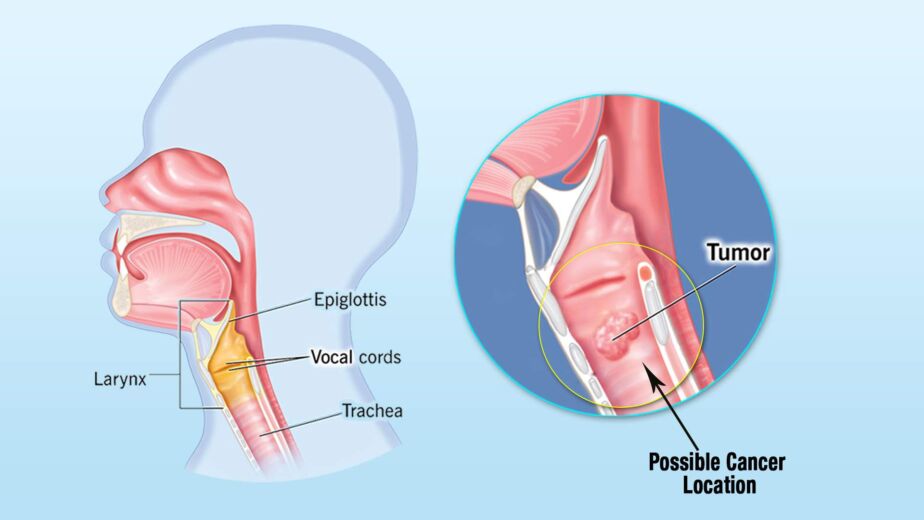
Before I got the results, I had spent a lot of time searching on Google. I already understood some basics. I immediately recognized that the tumors in my vocal cords were cancerous. The diagnosis read: Invasive well-differentiated squamous cell carcinoma. The reality was hard to swallow; I could not believe I had cancer. From where had this come? What had started as a hoarse voice had suddenly become a life-threatening condition.

I had read that most often this type of cancer is caused by heavy smoking, yet I had never smoked—even half a cigarette in my life. I wasn’t a heavy drinker either. I had always been health-conscious—eating well and going to the gym. From my Google searches, I learned that patients with this cancer who progress to stages 3 and 4 typically live, on average, for a maximum of six months. I had heard of cases where people deteriorated quickly and succumbed within six months of diagnosis. I could not imagine it. Later I learned that my disease had progressed to stage 3.

Turning Point: A message of Hope

After the heavy sobbing, I remembered that I still had to take the results to my doctor for interpretation the next day. Then I remembered I needed to call my uncle Dr. Humphreys Otele, a senior doctor in Nairobi. Considering how busy he was, I forwarded the biopsy results to him without explanation. He called me immediately and asked where I was. I told him I was at home. He said, “Please wait for me; I am coming over.” That reaction told me that all was not well.

On reflection, I asked him to meet me at a nearby shopping center so we could discuss privately. He didn’t take long to arrive. The first question he asked was what the doctor had said. I told him I was yet to see my doctor. We discussed many things after that. His objective was clear: let’s wait for the final word from your doctor, but even if the worst is confirmed, you should know this is not a death sentence. You can still survive, and I want you to start preparing for a fight. His simple, honest message of hope became everything I needed. After that talk, I made a resolve to put up a strong fight and change my outlook, focusing on beating the disease. The following day, I went to see Prof Macharia accompanied by my uncle, and a further test—a PET-CT scan—was prescribed.
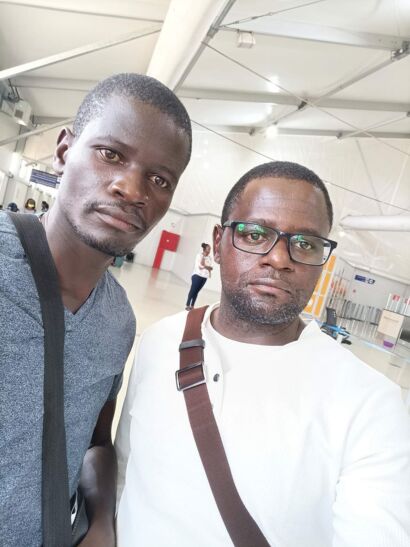
A photo of two men standing close together in an airport terminal. The man on the left wears a gray shirt and has a strap over his shoulder; the man on the right wears glasses and a white shirt with a brown shoulder bag. They pose for a selfie, with an airy, indoor backdrop and other travelers in the background. The caption notes that this is Kizito Namulanda (right) with his brother Peter Musumba traveling to New Delhi in April 2022.
Kizito Namulanda (right) with his brother Peter Musumba at the airport, en route to New Delhi in April 2022

Before undergoing the PET-CT, I continued going to work as the waiting list was a bit long. Things were not the same, but I kept everything to myself and prayed to God throughout. Only Dr. Mercy Korir—Editor in Charge of the Health Desk at the newly launched, modern digital newsroom that I had spearheaded as part of Standard Group’s digital transformation journey—knew what I was going through. She was immediately very helpful, using her medical background to provide support and moral assistance. I told my colleagues about what was happening only much later.

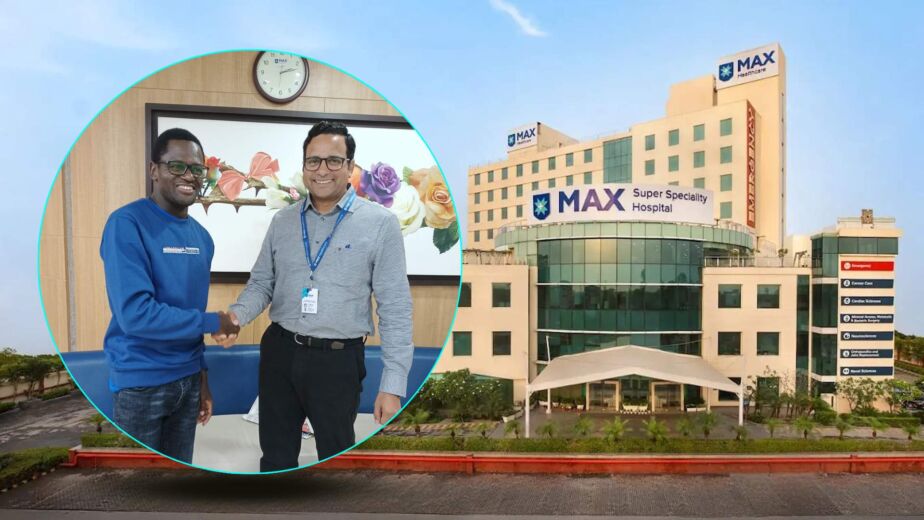
When I finally had the PET-CT, the results confirmed what we had feared. From that moment, we decided to fly to India for treatment. We planned everything and identified a hospital—Max Super Specialty Hospital in Delhi—and eventually flew out in April 2022.

In next installment, I will focus on how treatment went in India and what unfolded after I was allowed to travel back after completing treatment.

AUTHOR BIO

Kizito Namulanda is a seasoned Digital and Broadcast Media Executive renowned for leading digital newsroom transformations, digital innovation, and audience growth. A trusted editor and strategist, he has built enduring relationships with stakeholders and audiences, turning bold ideas into measurable results.

Today, Namulanda channels that same tenacity into a deeply personal three-part series that chronicles his battle with laryngeal cancer, the fight for voice, and the resilience required to rebuild life and career after recurrence. This narrative blends his professional rigor with lived experience, illustrating how courage, faith, and family sustain hope in the face of illness.

Life, like a winding river, rarely travels in a straight line. It twists, turns, and flows forward—even through challenges. When obstacles arise, we must remember that life goes on, and we can choose to keep flowing, even when the current is strong. Challenges can slow us, ground us, or bury us, yet they can also make us stronger and more prepared for what lies ahead.
Kizito Namulanda
What I Understood online

Before I got the results, I had spent a lot of time searching on Google. I already understood some basics. I immediately recognized that the tumors in my vocal cords were cancerous. The diagnosis read: Invasive well-differentiated squamous cell carcinoma. The reality was hard to swallow; I could not believe I had cancer. From where had this come? What had started as a hoarse voice had suddenly become a life-threatening condition.

I had read that most often this type of cancer is caused by heavy smoking, yet I had never smoked—even half a cigarette in my life. I wasn’t a heavy drinker either. I had always been health-conscious—eating well, going to the gym. From my Google searches, I learned that patients with this cancer who progress to stages 3 and 4 typically live, on average, for a maximum of six months. I had heard of cases where people deteriorated quickly and succumbed within six months of diagnosis. I could not imagine it. Later I learned that my disease had progressed to stage 3.

Turning point: a message of hope

After the heavy sobbing, I remembered that I still had to take the results to my doctor for interpretation the next day. Then I remembered I needed to call my uncle—a senior doctor in Nairobi. Knowing how busy he was, I forwarded the biopsy results to him without explanation. He called me immediately and asked where I was. I told him I was at home. He said, “Please wait for me; I am coming over.” That reaction told me that all was not well.

On reflection, I asked him to meet me at a nearby shopping center so we could discuss things without anyone at home hearing. He didn’t take long to arrive. The first question he asked was what the doctor had said. I told him I was yet to see my doctor. We discussed many things after that. His objective was clear: let’s wait for the final word from your doctor, but even if the worst is confirmed, you should know this is not a death sentence. You can still survive, and I want you to start preparing for a fight. His simple, honest message of hope became everything I needed. After that talk, I made a resolve to put up a strong fight and change my outlook, focusing on beating the disease.

We later visited the doctor together, and a further test—a PET-CT scan—was prescribed. The results confirmed what we already knew. From that moment, we set out to fly out to India for treatment. We planned, identified a hospital—Max Super Specialty Hospital in Delhi—and eventually flew out in April 2025.

In the first series of this narration, I focused on the diagnosis and travelling to India for treatment, in part two of the series, I will narrate what unfolded after I was allowed to travel back after completing treatment.

AUTHOR'S BIO

Kizito Namulanda is a seasoned Broadcast Media executive renowned for leading newsroom transformations, digital innovation, and audience growth. A trusted editor and strategist, he has built enduring relationships with stakeholders and audiences, turning bold ideas into measurable results.

Today, Namulanda channels that same tenacity into a deeply personal three-part series that chronicles his battle with laryngeal cancer, the fight for voice, and the resilience required to rebuild life and career after recurrence. This narrative blends his professional rigor with lived experience, illustrating how courage, faith, and family sustain hope in the face of illness.
Leave a Comment