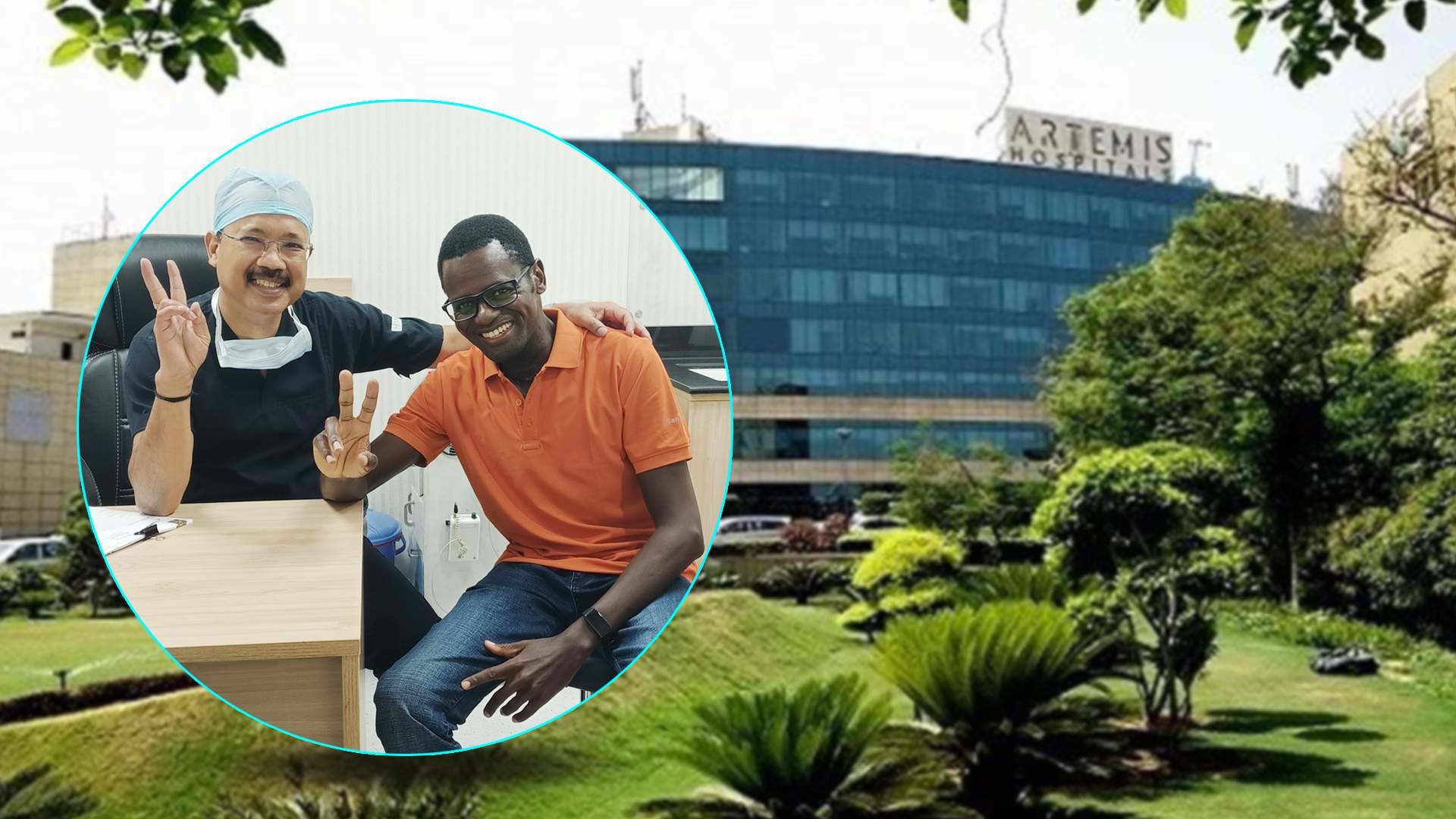
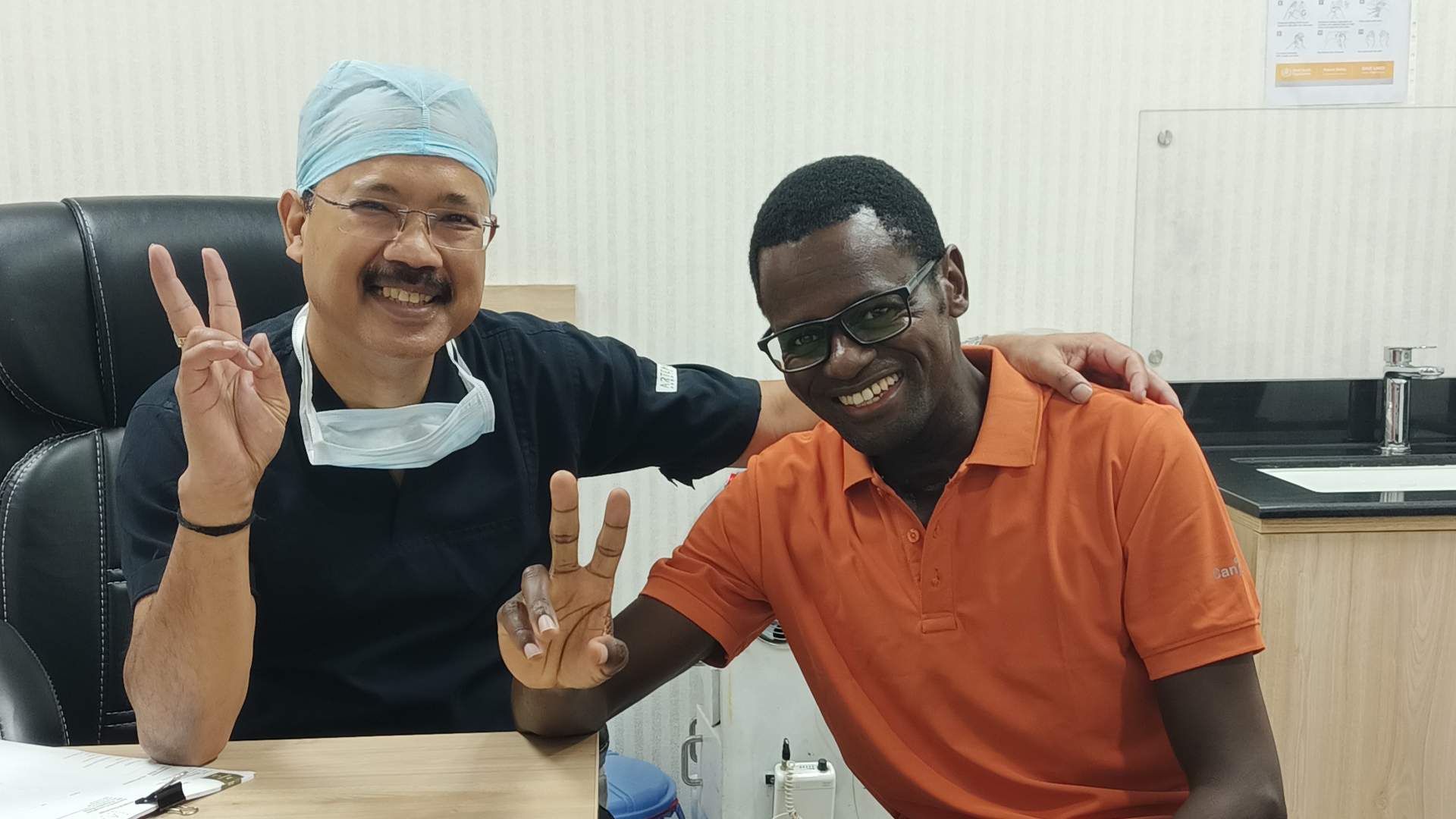
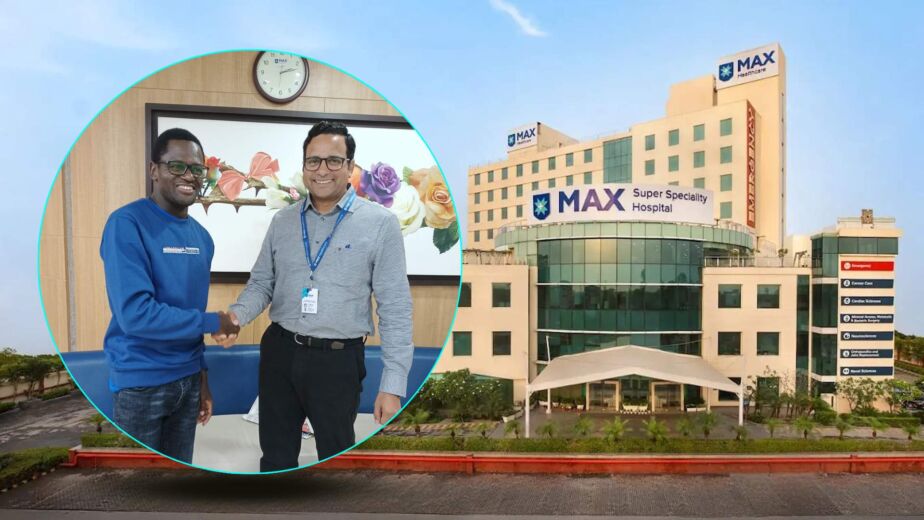
Dr. Biswajyoti Hazarika (left), Chief of Head and Neck Surgery at Artemis Hospital, with his patient Kizito Namulanda, following Namulanda’s recovery from a partial laryngectomy. Photo taken outside Artemis Hospital; in-set shows them in a clinic room.
Editor’s Introduction Dear valued readers,
Life, like a winding river, rarely travels in a straight line. It twists, turns, and flows forward—even through challenges. When obstacles arise, we remember that life goes on, and we can choose to keep flowing, even when the current is strong. Challenges can slow us, ground us, or bury us, yet they can also make us stronger and more prepared for what lies ahead.
At Kollea Hub, we transform challenges into inspiration through powerful storytelling. We give people facing difficult situations a platform to share experiences that uplift others. Those who overcome life-threatening situations become our Life Champions.
Meet our first Life Champion: Duncan Kizito Namulanda. Namulanda battled stage 3 laryngeal cancer with radiotherapy and chemotherapy; when it recurred a year later, he faced surgery—his throat literally cut open—leaving him with a permanent voice disability. While recuperating, his employer, Standard Group, delivered a blow: a termination email while he was in India for treatment. After nineteen years at KTN—Standard Group—his career ended in the harshest way. He faced a stark choice: weep over a lost job or fight for his life as cancer held him by the neck.
His resolve is truly remarkable. In a three-part series, Namulanda narrates his journey to inspire others.
This is his story—told to inspire.
Editor, Kollea Hub
Part III: Recurrence, Surgery, And Aftershocks
By Kizito Namulanda
In the first two parts of this narration, I focused on the diagnosis, the journey to India for treatment, and what unfolded after I returned home following completion of treatment. In the third and final part, I turn to recurrence, surgery, and the aftershocks that followed..
Recurrence and the Hard Choices
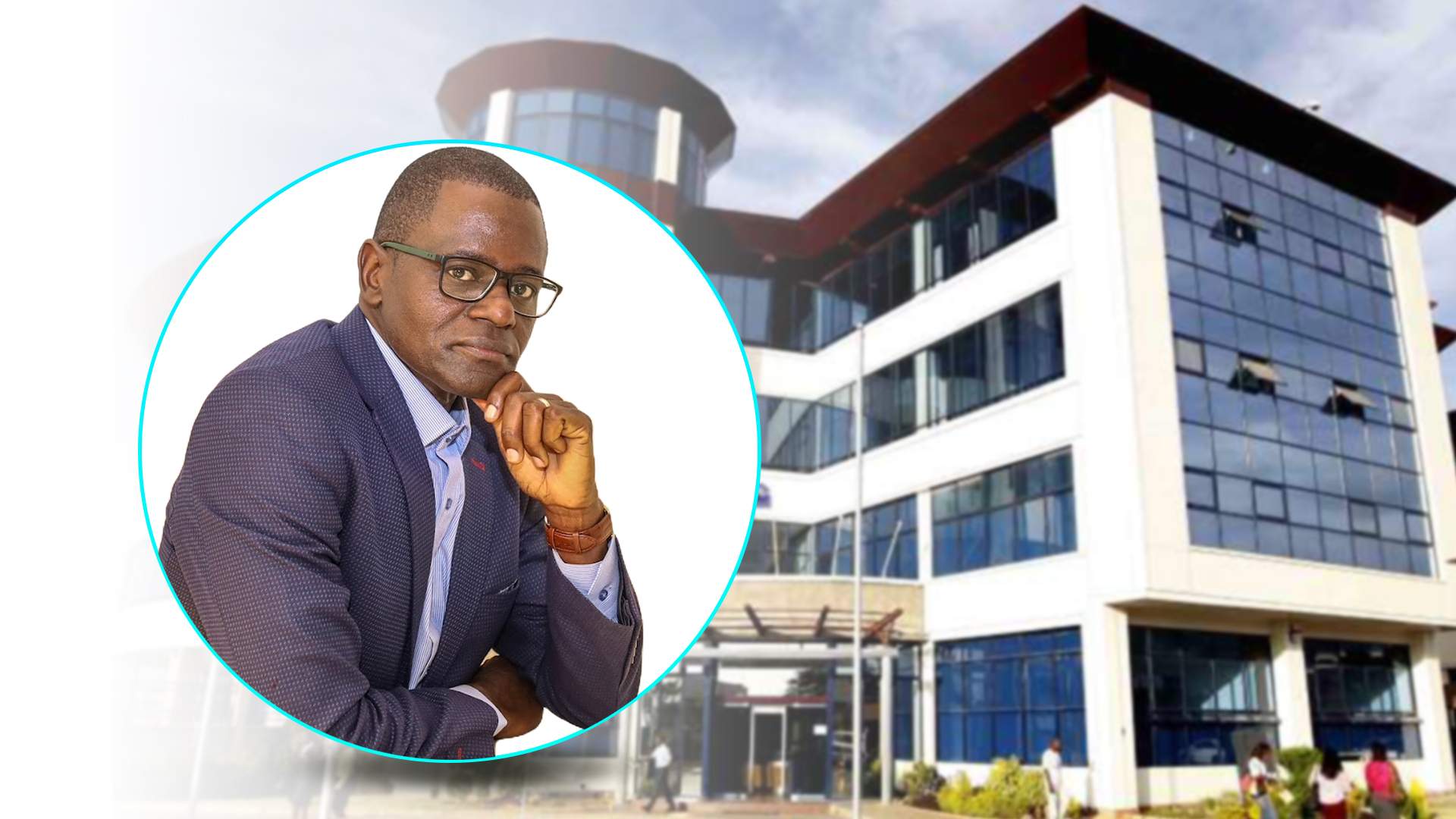
After three months, I traveled back for review and follow-up treatment as prescribed, and all went well. The doctors were happy with my progress. I was scheduled for another review after six months, which also went well, followed by another six-month schedule. As that second six-month mark approached, my voice began changing again— became hoarse and weak. Worried, I scheduled a review with my doctor in Nairobi. It wasn’t the news I had hoped for. Just when I thought I had beaten the monster, signs of recurrence emerged. A PET-CT scan returned results I had prayed against.The shock was overwhelming. For a day or two I felt like giving up, but with my family’s encouragement I pulled myself together and resolved to fight again. My mind wandered to what happened, but I knew I had to refocus. The options ahead were not encouraging. Since I had already undergone chemoradiation, the only viable option left was surgery—the removal of my entire voice box. The first, second, and third opinions all agreed: because the disease recurred after radiotherapy, I had no option but a total laryngectomy – meaning the whole voice box would be removed.The doctors explained how technology was advanced with artificial voice boxes that can enable communication, but I kept the hope of saving my voice. I prayed endlessly to God to save my voice or at least part of it. I set out to seek a fourth opinion.One morning, around 10 a.m., while at work (I had kept going to work as I sought out the best treatment options), I received a call from Mr. Chiragh Gandhi of Parishay Healthcare (formerly of Max Super Specialty Hospital—Nairobi). Mr. Chiragh had committed to finding me a doctor who could save my voice. That morning, he connected me with Dr. Biswajyoti Hazarika, the Chief of Head and Neck Surgery at Artemis Hospital in Gurgaon, New Delhi. Dr. Hazarika, after studying my records, said it was difficult to promise anything, but he would do his best to preserve my voice if I travelled to Artemis. He empathised, saying I was still young and needed my voice to earn a living as a broadcast journalist. He said he would be able to give a concrete diagnosis after further examination in Delhi.Glimmer of HopeThat was all I needed—a glimmer of hope to cling to. I immediately started mobilising resources to travel to New Delhi again, this time to Artemis Hospital in Gurgaon. The doctors at Max where I had been before had ruled out the possibility of a partial laryngectomy.When I arrived at the airport, my coordinator Mr. Manmohan Rawat, working closely with Madam Deepika Sundas, arranged for a driver from Artemis Hospital to pick me up. I was in the hospital the next morning and very happy to finally meet Dr. Biswajyoti Hazarika, who was accompanied by Dr. Priyanka Reina. He remembered our phone conversation. Once again, we began the examination stage, repeating all the tests, which included a direct laryngoscopy, a PET-CT scan, and a biopsy.After full examination Dr. Hazarika again explained to me that the position of the cells looked tight, but he would try everything possible to spare the voice box. I remember him saying, “if you wake up and find that the whole voice box has been removed, just know that I really tried everything I could, but it didn’t work.” He promised me he would really do his best to save my voice.The Surgical Moment: Voice Preservation and HopeBy the time I was heading to theatre, I was already receiving two sets of preparations—one for a partial and another for a total laryngectomy. I prayed day and night and clung to that little glimmer of hope. I remained optimistic that God would answer my prayers.When it was finally time to go to the theatre, I had to summon every bit of courage, hope, and optimism in the world. In such moments, I usually turn to gospel songs for uplift, but at that hour they overwhelmed me with emotion. I needed something to steady me, so I turned to soukous songs mostly by Kanda Bongoman. His music reminded me of my high school days, and my high friends’ support had been a powerful ballast during that difficult moment. Kanda Bongoman himself, who is also a close friend, had personally encouraged me to go through the surgery without worrying much about the outcome, and at that hour I found courage in his songs as I prepared for the surgeon’s knife.Before anesthesia, I offered silent prayers and surrendered everything to God. When I woke up, it felt like a movie scene: I was in ICU, strapped and immobile, with beeps all around. My wife who had accompanied me stood nearby, overwhelmed. Nurses checked me, and the doctors confirmed I had woken up. Though exhausted, I was still very eager to know how the operation went. Soon after, Dr. Priyanka Reina, who had worked closely with Dr. Hazarika, arrived at my bedside smiling with good news: they were able to keep part of my voice box after performing a partial laryngectomy. I felt immediate relief—my prayer had been answered. I smiled and silently thanked God.Dr. Biswajyoti Hazarika (left), Chief of Head and Neck Surgery at Artemis Hospital, with his patient Kizito Namulanda, following Namulanda’s recovery from a partial laryngectomy.Dr. Hazarika later explained that the operation was extremely complex—one that many doctors usually avoided – but he took it on because he really wanted to save my voice so I could continue earning a living as a broadcast journalist.Termination Amid RecoveryRecovery was a very rough journey, particularly the first month, when I could only feed through pipes. After returning to Nairobi, I required regular trips to New Delhi for follow-up treatment, which I still make to this day, though not as regular as was the case immediately after surgery. On my first post-surgery review, three months later, I received a cruel blow: I was served a termination letter from my employer. A colleague informed me he’d received a termination notice and was reaching out to thank me for giving him a chance to work at KTN. I was in shock, as I wasn’t aware of any retrenchment plans in my department, but I encouraged him to stay strong and seek other opportunities.Portrait of Kizito Namulanda against the backdrop of the Standard Group headquarters along Mombasa Road, Nairobi.Unknown to me, a similar letter had already been emailed to me. When I finally saw it, I didn’t know what to do. I was completely shaken and confused, but an inner voice urged me to prioritise that which was most important – health. After listening to that voice, I chose to focus on praying for a good medical report from the doctors. God answered again—the medical results were favorable. After recovering, I returned to Nairobi to plead my case, but the company stood firm: the decision was final. There were several interventions to try reverse my termination, but nothing moved.When I took long to pick up my letter hoping and praying for a reversal, the company emailed the termination letter to me to formally indicate that my termination was not being revisited in any way. I gave up and finally went to collect the letter. The company was offering severance payments in ten equal monthly installments rather than a lump sum. I pleaded for a one, or two-installment settlement given my condition, but they refused to discuss anything before I signed the termination letter. In fact, I was warned that if I delayed, I would miss the first installment, which was due in a month. In desperate need of that money, I signed. And that became the end of that chapter. Fourteen months later, I am still pleading for settlement of my severance package. Not even that first installment was paid. It seems it was just a bait to make me sign the documents. I have written several emails to explain how badly I need this money to get me out of my current financial strain that is threatening to take me back, but I still haven’t gotten any breakthrough. I remain hopeful as I pray about the matter.Lessons learntI have learned many lessons going through this journey, but two stand out: first, God will never forsake you if you put your trust in Him; second, when faced with multiple battles, you must choose wisely which to prioritise. The journey was and is still tough, but I thank God I am in good health now and ready to start afresh. Each morning, like a football striker emerging from a drought, I pray for that one chance to put the ball in the net and bring back the joyful moments.I end with that Luhya proverb that was said to me so many times when I visited my village after first treatment: Kwalulukha, kulooma, which basically means its better for a tree to shed all its leaves during the dry season than dry up.Thank you for reading my story. I hope you will be inspired to keep fighting when faced with life challenges.
EndAUTHOR BIO
Kizito Namulanda is a seasoned Digital and Broadcast Media executive renowned for leading digital newsroom transformations, digital innovation, and audience growth. A trusted editor and strategist, he has built enduring relationships with stakeholders and audiences, turning bold ideas into measurable results.Today, Namulanda channels that same tenacity into a deeply personal three-part series that chronicles his battle with laryngeal cancer, the fight for voice, and the resilience required to rebuild life and career after recurrence. This narrative blends his professional rigor with lived experience, illustrating how courage, faith, and family sustain hope in the face of illness.
The Surgical Moment: Voice Preservation and Hope
By the time I was heading to theatre, I was already receiving two sets of preparations—one for a partial and another for a total laryngectomy. I prayed day and night and clung to that little glimmer of hope. I remained optimistic that God would answer my prayers.
When it was finally time to go to the theatre, I had to summon every bit of courage, hope, and optimism in the world. In such moments, I usually turn to gospel songs for uplift, but at that hour they overwhelmed me with emotion. I needed something to steady me, so I turned to Lingala songs mostly by Kanda Bongoman. His music reminded me of my school friends, and their support was a powerful ballast. Kanda himself who is also a close friend, had encouraged me to go through the surgery without worrying about the outcome. I found courage in Kanda Bongoman’s songs and in soukous as I prepared for the surgeon’s knife.
Before anesthesia, I offered silent prayers and surrendered everything to God. When I woke, it felt like a movie scene: I was in ICU, strapped and immobile, with beeps all around. My wife stood nearby, overwhelmed. Nurses checked me, and the doctors confirmed I had woken up. Though exhausted, I was eager to know how the operation went. Dr. Priyanka Reina, who had worked closely with Dr. Hazarika, arrived at my bedside with good news: they were able to keep part of my voice box. I felt immediate relief—my prayer had been answered. I smiled and silently thanked God.
Dr. Hazarika later explained that the operation was extremely complex—one many doctors avoid—yet he took it on because he wanted to save my voice so I could continue earning a living as a broadcaster.
Termination Amid Recovery
Recovery was a rough journey, particularly the first month, when I could only feed through pipes. I required regular trips to New Delhi for follow-up treatment, which I still make to this day. On my first post-surgery review, three months later, I received a cruel blow: I was served a termination letter from my employer. A colleague informed me he’d received a termination notice and was reaching out to thank me for giving him a chance to work at KTN. I was in shock, as I wasn’t aware of any retrenchment plans in my department, but I encouraged him to stay strong and seek other opportunities.
Unknown to me, a similar letter had already been emailed to me. When I finally saw it, I didn’t know what to do. I was completely shaken and confused, but an inner voice urged me to prioritize health. After listening to that voice, I chose to focus on praying for a good medical report from the doctors. God answered again—the medical results were favorable. After recovering, I returned to Nairobi to plead my case, but the company stood firm: the decision was final.
When I finally went to collect my letter, I discovered the company was offering severance payments in ten monthly installments rather than a lump sum. I pleaded for a one- or two-installment settlement given my condition, but they refused to discuss anything before I signed the termination letter. If I delayed, I would miss the first installment, which was due in a month. In desperate need of that money, I signed. That was the end of that chapter. Fourteen months later, I am still pleading for that first installment.
Lessons learnt
I have learned many lessons, but two stand out: first, God will never forsake you if you put your trust in Him; second, when faced with multiple battles, you must choose wisely which to prioritize. The journey has been tough, but I thank God I am in good health now and ready to start afresh. Each morning, like a football striker emerging from a drought, I pray for that one chance to put the ball in the net and bring back the joyful moments.
I end with a Luhya proverb: Kwalulukha, kulooma.
Thank you for reading my story. I hope you will be inspired to keep fighting when faced with challenges.
AUTHOR'S BIO
Kizito Namulanda is a seasoned Broadcast Media executive renowned for leading newsroom transformations, digital innovation, and audience growth. A trusted editor and strategist, he has built enduring relationships with stakeholders and audiences, turning bold ideas into measurable results.
Today, Namulanda channels that same tenacity into a deeply personal three-part series that chronicles his battle with laryngeal cancer, the fight for voice, and the resilience required to rebuild life and career after recurrence. This narrative blends his professional rigor with lived experience, illustrating how courage, faith, and family sustain hope in the face of illness.
Unknown to me, a similar letter had already been emailed to me. When I finally saw it, I didn’t know what to do. I was completely shaken and confused, but an inner voice urged me to prioritise that which was most important – health.
Kizito Namulanda
5 Comments
Paul Achungo
Posted
December 4, 2025 at
9:41 am
Keep strong my friend school mate it shall be well
Martin ngesa
Posted
December 4, 2025 at
10:31 am
Pole omwami. God is 👍
Enock Matundura
Posted
December 6, 2025 at
12:37 pm
Pole Ndugu KMD. Mungu aendelee kukupigania katika vita hivi vikali, na bila shaka utapata ushindi.
Peter Mwabili
Posted
December 8, 2025 at
6:55 pm
All will be well InshaAllah
Patrick Rukwaro
Posted
January 13, 2026 at
10:25 am
You are truly strong. God Almighty will see you through.
FROM THE EDITOR Dear our valued readers, Life, like a winding river, rarely travels in a straight line. It twists, turns, and flows forward—even through challenges. When obstacles arise, we must remember that life goes on, and we can choose to keep flowing, even when the current is strong. Challenges can slow us, ground us, or bury us, yet they can also make us stronger and more prepared for what lies ahead. At Kollea Hub, we have embarked on a journey to transform challenges into inspiration through storytelling. Our aim is to give people facing difficult situations a platform to share their experiences in a way that uplifts others. When someone has overcome adversity, we will call them a Life Champion.
Meet our first Life Champion: Duncan Kizito Namulanda. Kizito Namulanda battled stage 3 laryngeal cancer at the start of 2022, undergoing combined radiation and chemotherapy treatment in India before the disease recurred a year later, prompting a surgery that literally cut his throat open. While still rebuilding, his employer—Standard Group—delivered an unexpected blow: a termination email while he was in India for treatment. His nineteen years of dedication at KTN—Standard Group—ended in the harshest way. Yet he remained focused. He faced a stark choice: weep over a lost job or fight for his life as cancer held him by the throat—literally. Laryngectomy, the surgery to remove part or all of the voice box, left Namulanda with a permanent voice disability—a new chapter he never imagined. But his resolve to keep going is truly remarkable. In a touching three-part series, Namulanda narrates his journey to inspire others. This is his story—told to inspire. Your Editor, Kollea Hub
CONSENT AND COLLABORATION This narrative is published with Namulanda’s explicit, informed consent. He reviewed the material and approved its presentation in this series. We have respected his privacy by omitting or generalizing sensitive personal details beyond what he chose to share publicly. Namulanda remains an active collaborator in the series, with opportunities to review future publications and contribute updates or corrections as needed.
Consent and Collaboration
This narrative is published with Namulanda’s explicit, informed consent. He reviewed the material and approved its presentation in this series. We have respected his privacy by omitting or generalizing sensitive personal details beyond what he chose to share publicly. He remains an active collaborator in the series with opportunities to review future publications and contribute updates or corrections when needed.
Share Your Story
If you or someone you know has faced a life-altering challenge and finds meaning in sharing experiences to help others, we’d like to hear from you. Share a brief note about your journey, and we may invite you to participate in a future installment of this series. Your story could become a source of strength for others navigating their own difficult paths.
What is IDAMM?
IDAMM stands for Integrated Digital Accessibility Maturity Model. It assesses a sector or organization across fifteen dimensions of digital accessibility maturity: Awareness, Culture, Communication, Competencies/Training, Processes, Strategy, Policy, Standards, Procurement, ICT Life Cycle, Legal Compliance, Personnel, Intention, Perceived Readiness, and Digital/ICT Accessibility.
Maturity levels: Inactive, Launch, Integrate, Optimize. The workshop’s baseline flagged many organizations as Inactive, signaling substantial room for growth and investment in accessible digital services.


5 Comments
Paul Achungo
Keep strong my friend school mate it shall be well
Martin ngesa
Pole omwami. God is 👍
Enock Matundura
Pole Ndugu KMD. Mungu aendelee kukupigania katika vita hivi vikali, na bila shaka utapata ushindi.
Peter Mwabili
All will be well InshaAllah
Patrick Rukwaro
You are truly strong. God Almighty will see you through.