Skip to content Skip to sidebar Skip to footer

Kenya’s Justice Sector Journeys Toward Inclusive Digital Justice
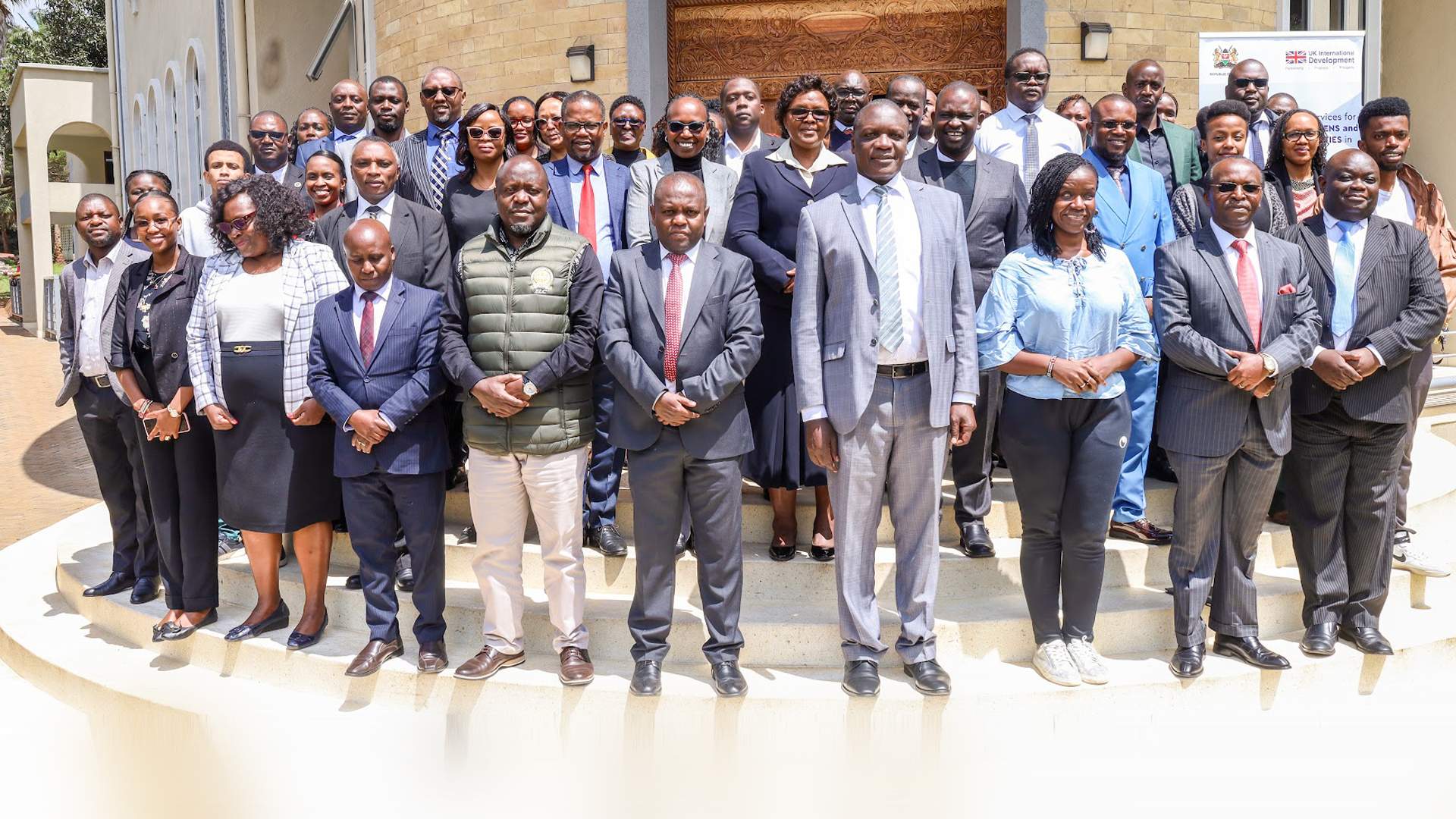
Group photo of delegates and participants at the Justice Sector Digital Inclusivity workshop, held August 2025 at the Prosecution Institute, Loresho, Nairobi.

Editor’s Introduction
Introducing – DIGITAL FOR ALL

In a world that has embraced digital everything, accessibility remains the missing thread for many Kenyans. Digital services—from government portals to civic platforms—promise convenience and efficiency. Yet for Persons with Disabilities (PwD), those promises are not automatically turning into reality. At KOLLEA HUB, we believe storytelling is a powerful catalyst for change. Through DIGITAL FOR ALL, our new series, we lift voices, spotlight progress, and scrutinize gaps in digital inclusion for PwD across Kenya.

What DIGITAL FOR ALL aims to do

  • Highlight inclusive digital design: examining whether government and private platforms are accessible to PwD, regardless of ability.
  • Chronicle policy and practice: translating laws and initiatives into ground-level impact for PwD.
  • Elevate PwD voices: centering stories from people with disabilities to humanize data and remind decision-makers that accessibility is lived experience.
  • Foster practical solutions: showcasing best practices, innovations, and collaborations that advance real, usable access for PwD.

Why now, and why Kenya
In 2025 Kenya enacted the Persons with Disabilities Act 2025, recognizing that access to information and ICT is essential for education, employment, civic participation, and daily life. In the justice sector, a coalition of policymakers and technologists convened in August 2025 to chart an industry-wide roadmap for inclusive judiciary services, with implementation slated to begin in January 2026. The high-profile workshop that catalyzed this roadmap was funded by the UK Digital Access Programme (DAP).

What you’ll find in this series

  • Policy milestones, legislative updates, and practical deployments of inclusive digital services for PwD.
  • Case studies from government, civil society, and tech partners detailing what worked, what didn’t, and why.
  • Personal narratives that reveal everyday realities of navigating digital systems with disabilities.
  • Conversations about funding, training, disability awareness, and user-centered design in public and private sectors.
  • Concrete recommendations for policymakers, service designers, educators, and community advocates aiming to close the digital divide for PwD.

As we launch DIGITAL FOR ALL, we invite readers to engage, question, and contribute. If you have an experience, project, or policy update related to digital inclusion for PwD, we want to hear from you. Our aim is to document and accelerate the journey toward equitable access by catalyzing dialogue and collaboration among citizens, government, and tech ecosystems.
Together, we can ensure that digital equality for PwD is not a slogan but a lived reality for all Kenyans. Welcome to DIGITAL FOR ALL.

Editor,
Kollea Hub

Aenean arcu metus, suscipit ac sagittis vel, varius vulputate purus. Vestibulum eget felis at ipsum suscipit elementum eget a nulla. Curabitur auctor dignissim vestibulum. Praesent vel imperdiet nunc, sit amet venenatis sapien. Aenean quis varius nibh, vel egestas metus. Aenean blandit varius lacinia. Praesent imperdiet egestas aliquet. Integer luctus ex quis feugiat malesuada. Nulla quis mollis leo, quis aliquam sem. Cras et est id dolor elementum volutpat eget et augue. Nulla eu sollicitudin lorem.

Aenean arcu metus, suscipit ac

By Kollea Hub Team

A high-profile workshop in August 2025 underscored the Kenyan Justice Sector’s commitment to delivering inclusive digital services for all, including persons with disabilities. Funded by the UK Digital Access Programme (DAP) through the British High Commission, Nairobi, the gathering—part of the Gava Mkononi collaboration—pulled together senior policymakers, judges and disability advocates to shape a sector-wide roadmap for digital inclusivity in judicial services.

Roadmap to an accessible future

The workshop produced a decisive outcome: the development of a sector-wide digital inclusivity implementation roadmap. The plan is set to guide the Justice sector’s digital transformation and is scheduled to begin in January 2026, in partnership with UK DAP. The milestone represents a tangible step from policy to practice, aiming to ensure that digital justice is accessible to all Kenyans.

Foundations and context

The initiative builds on Kenya’s broader digital transformation efforts within the judiciary. Since the COVID-19 pandemic, the judiciary has embraced virtual court sessions to maintain service delivery. This momentum is anchored in the Blueprint for Social Transformation through Access to Justice (STAJ), a 10-year plan (2023–2033) that seeks to make justice more accessible, efficient, transparent, accountable, and inclusive through technology.

Leaders and advocates at the event included Hon. Justice Isaac Lenaola, Chair of the Integrated Case Management System (ICMS) and a Supreme Court judge; Hon. Justice Daniel Musinga, President of the Court of Appeal; disability rights advocate and Senator Hon. Crystal Asige; Justice Dr. Kibaya Imaana Laibuta of the Court of Appeal; Dr. Hosea Kili, Chair of the Kenya Society for the Blind (KSB); and UK DAP Country Lead Charles Juma. The gathering affirmed the judiciary’s leadership role in building a more accessible public sector.

Measuring digital maturity

The workshop also served as a baseline survey, using the Integrated Digital Accessibility Maturity Model (IDAMM) to assess the sector’s online accessibility maturity. Initial findings indicated that many justice-sector organizations rated their websites as either Inactive or Launch in terms of accessibility, highlighting the need for targeted improvements across multiple dimensions. IDAMM evaluates fifteen aspects of digital accessibility maturity—ranging from Awareness and Culture to Policies, Standards, and Legal Compliance—across four maturity levels: Inactive, Launch, Integrate, and Optimize.
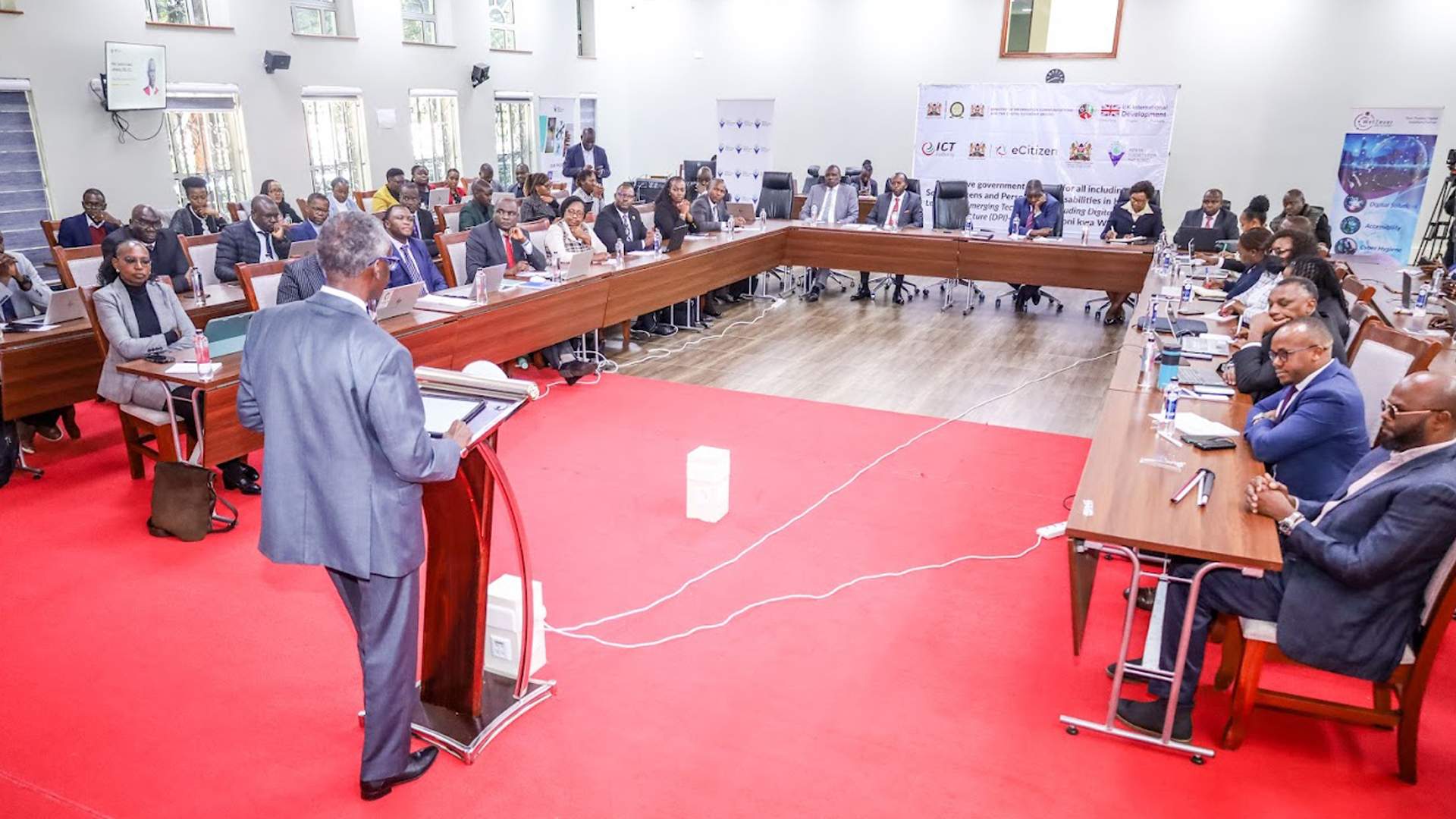
Justice Isaac Lenaola addresses workshop attendees at the Justice Sector Digital Inclusivity workshop, held at the Prosecution Institute in Loresho, Nairobi, in August 2025, with participants seated around long tables.
Justice Isaac Lenaola addresses participants at the Justice Sector Digital Inclusivity workshop, held at the Prosecution Institute in Loresho, Nairobi, August 2025.

A rights-centered imperative

In his remarks, Justice Lenaola emphasized that inaccessible services amount to a denial of justice. He urged the judiciary to treat digital inclusion as a constitutional duty under Article 54, underscoring the need for equal access to information, equal opportunity to participate, and respect for dignity and autonomy.

Partnerships and funding

The August workshop was funded by UK DAP through the British High Commission, Nairobi, under the Gava Mkononi kwa Wote project. Implementing partners included the Kenya Society for the Blind (KSB) and Wetzever Solutions, among others, illustrating a cross-sector collaboration that brings together disability rights groups, technology providers, and development partners.

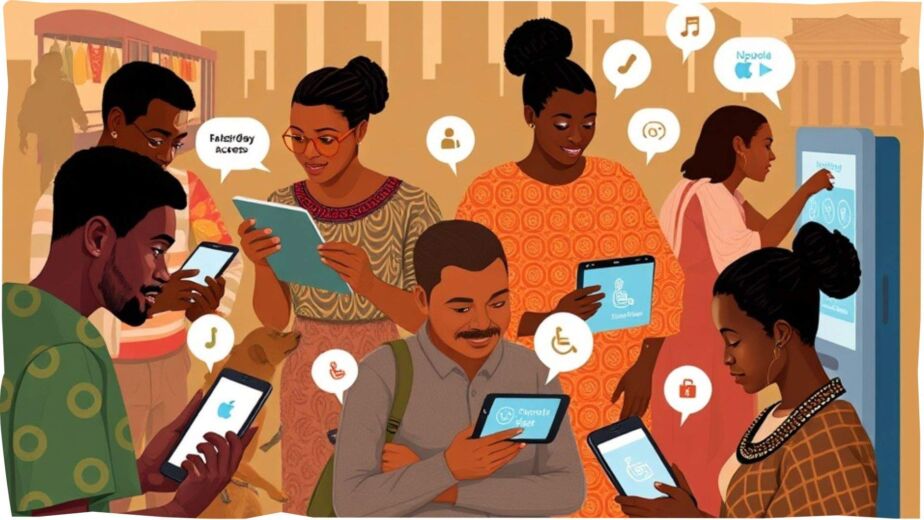
What is IDAMM? IDAMM stands for Integrated Digital Accessibility Maturity Model. It assesses a sector or organization across fifteen dimensions of digital accessibility maturity: Awareness, Culture, Communication, Competencies/Training, Processes, Strategy, Policy, Standards, Procurement, ICT Life Cycle, Legal Compliance, Personnel, Intention, Perceived Readiness, and Digital/ICT Accessibility. Maturity levels: Inactive, Launch, Integrate, Optimize. The workshop’s baseline flagged many organizations as Inactive, signaling substantial room for growth and investment in accessible digital services.
Kollea Hub Team

Sed ut mauris turpis. Etiam tortor sapien, vestibulum nec nulla et, malesuada commodo sem. Ut suscipit maximus quam, vel volutpat nibh ultricies eget. Nunc quis mollis dolor, vitae pellentesque ligula. Aliquam pretium porttitor risus, eget lobortis tortor facilisis quis. Curabitur imperdiet leo id purus euismod, faucibus maximus massa sodales. Etiam lobortis varius lobortis. In tempor venenatis mi.

Videos

Leave a Comment